In This Article
|
Key Takeaways
|
What does it take to make a wedding dress unforgettable? For Princess Diana, the answer was three fabrics working together: ivory silk taffeta gave her 1981 gown its structure, antique lace from Queen Mary's own collection covered the bodice, a detail preserved by Historic Royal Palaces, and a silk tulle veil stretching 153 yards completed the effect, trailing behind a 25-foot train, the longest in royal wedding history.
Diana didn't leave any of that to chance, and you shouldn't either. Fabric is what decides whether a dress holds a sharp silhouette or drapes softly, whether you can dance in it by hour six, and how it actually photographs. Silk taffeta holds structure, while scuba fabric skips the boning most gowns need. This guide walks through the 11 most popular wedding dress materials, so you can make the same kind of deliberate choice for yours.
|
Quick Answer: What Are The Most Popular Wedding Dress Fabrics Right Now? Right now, the most popular wedding dress fabrics are satin, lace, tulle, organza, mikado, and crepe. Modern brides are also picking scuba and neoprene for reception dresses and rehearsal dinner looks. The right fabric for you depends on your wedding's season, venue, and silhouette, which this guide covers next. |
What Are the Different Types of Fabric Used for Wedding Dresses?

Every wedding dress fabric has unique characteristics. Some create dramatic volume, while others deliver effortless elegance. Understanding these differences makes choosing your dream gown much easier. Here's what to know about each one.
1. Satin
Satin is the most common wedding dress fabric, as it has a smooth, glossy surface that holds structure well. It photographs beautifully under both natural and indoor lighting.
- Best for: Fitted mermaid or structured ballgown silhouettes; smooths the torso and defines the waist, which works well for hourglass and fuller figures
- Best season: Year-round, though it runs a little warm for peak summer
- Feel: Smooth surface, moderate weight, minimal stretch
-
Travel advisory: Creases easily, especially in silk satin, so pack it in a garment bag and plan to steam before the ceremony.
Terani's Pick:
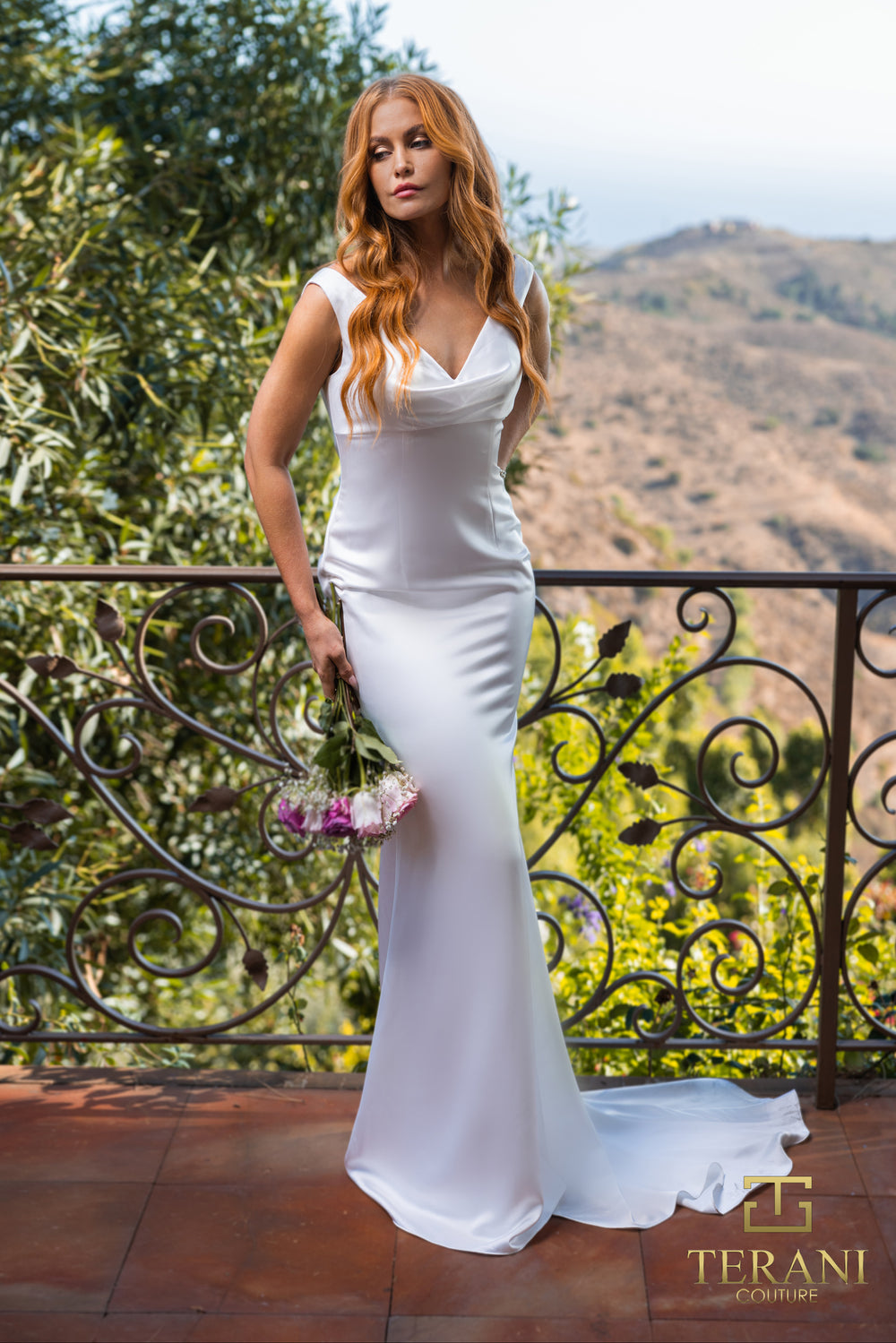
keeps a fitted bodycon silhouette with a classic V-neckline, letting satin's smooth surface and subtle sheen carry the look. It comes in sizes 0-24, with a subtle train, center-back zipper, and hook-and-eye closure for a clean finish.
2. Mikado
Mikado is a heavy, silk-blend fabric with a slight sheen and a lot of built-in structure. It holds sculpted, architectural shapes without needing extra boning.
- Best for: Sculpted ballgowns and mermaid silhouettes; holds shape without boning digging in, good for brides who want structure without stiffness
- Best season: Fall and winter, too warm for most outdoor summer weddings
- Feel: Heavier fabric with body, minimal stretch, holds its shape through a long day
- Travel advisory: Resists deep wrinkles because of its weight, though that same weight adds to your luggage for destination weddings.
Terani's Pick:
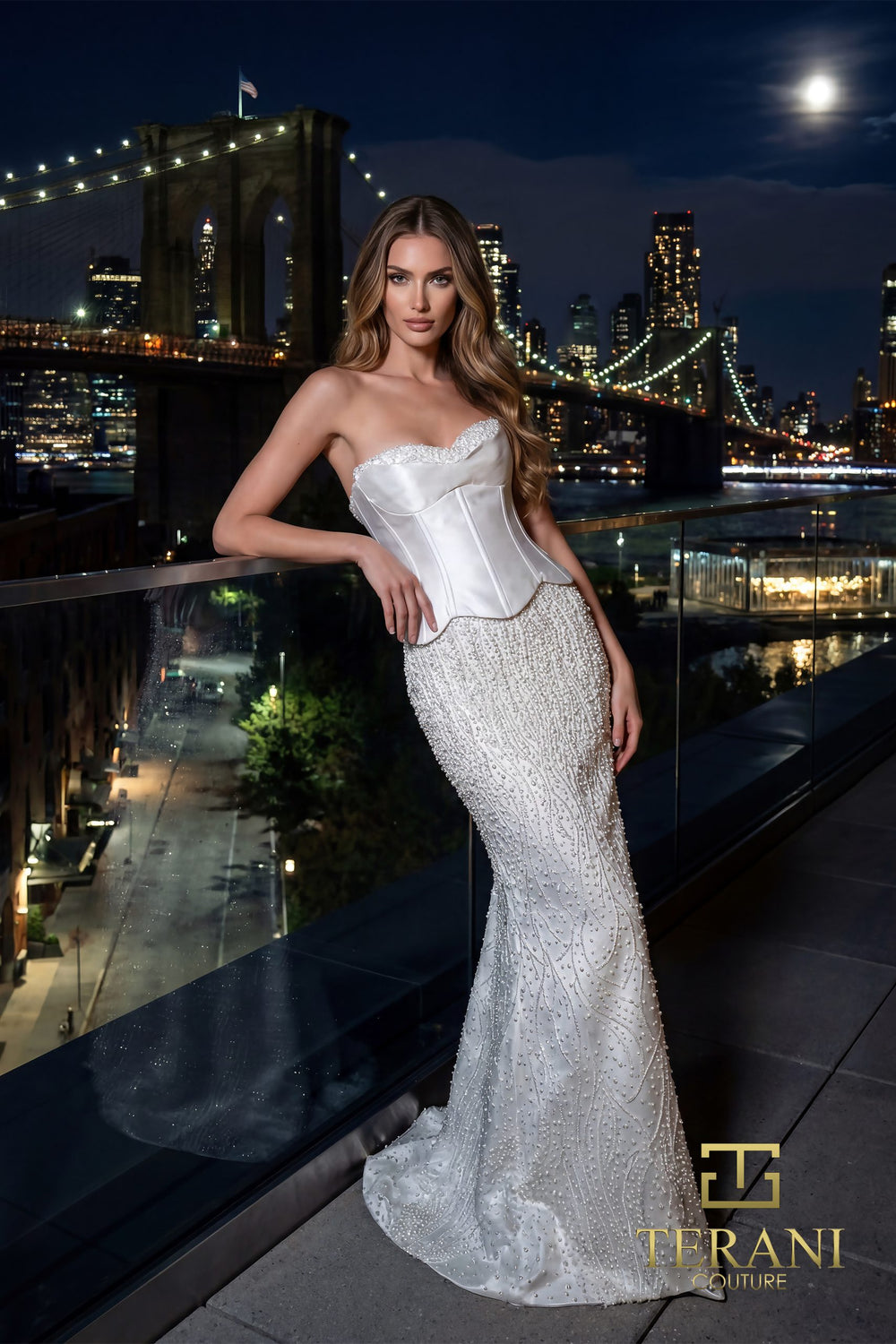
uses mikado's natural stiffness to hold a fitted mermaid silhouette through the bodice and hips before flaring at the hem. A strapless sweetheart neckline and beaded skirt detailing complete the look, closing with a center-back zipper and hook-and-eye.
3. Taffeta
Taffeta is a crisp fabric with a soft rustle and a naturally structured feel. It holds voluminous skirts without sagging.
- Best for: Voluminous ballgowns and fit-and-flare cuts; adds visible volume without much weight, useful for petite frames wanting fullness
- Best season: Fall and winter, when its weight and stiffness feel right for the season
- Feel: Crisp and stiff, minimal stretch, can feel rigid directly against skin
- Travel advisory: One of the more crease-prone fabrics on this list, so it needs professional steaming and shouldn't sit folded before the ceremony.
Terani's Pick:
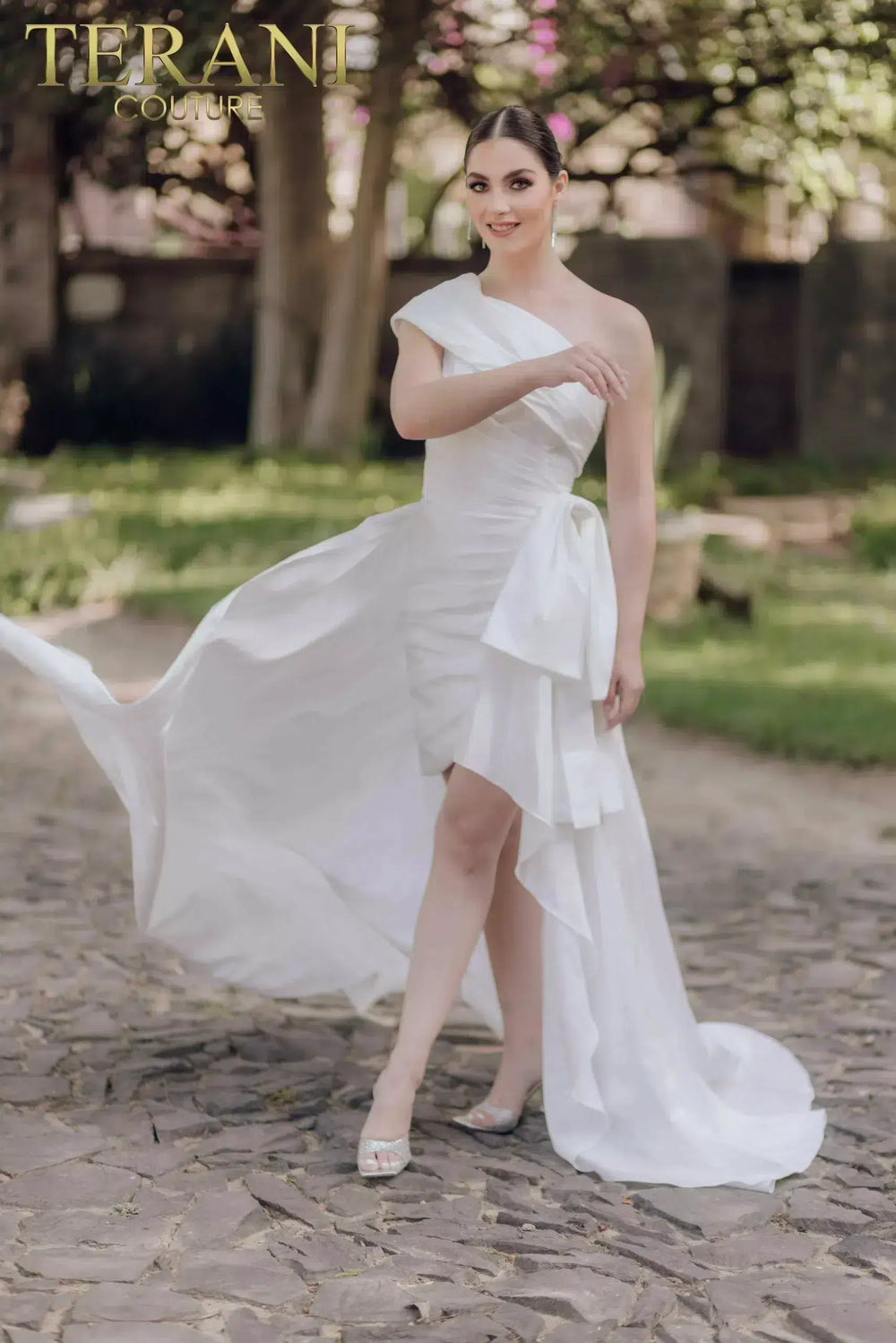
uses taffeta's crispness to hold a dramatic overskirt with cascading ruffles over a fitted sheath silhouette. Ruching on the bodice and a mid-open back add shape, and the high-low hem shows off how well the fabric holds a sharp edge.
4. Jacquard
Jacquard fabric has a pattern woven directly into it, instead of printed or embroidered on top. The technique traces back to the Jacquard loom, patented in 1804 by French weaver Joseph-Marie Jacquard, now part of the Smithsonian's permanent collection.
- Best for: Fitted and semi-structured silhouettes; the woven pattern adds detail without extra embellishment, works across most body types
- Best season: Year-round, suits indoor and evening weddings in any season
- Feel: Textured but not heavy, minimal stretch, stays structured through long wear
- Travel advisory: Holds its shape well in transit, and the woven pattern tends to hide minor creases better than a smooth weave.
Terani's Pick:
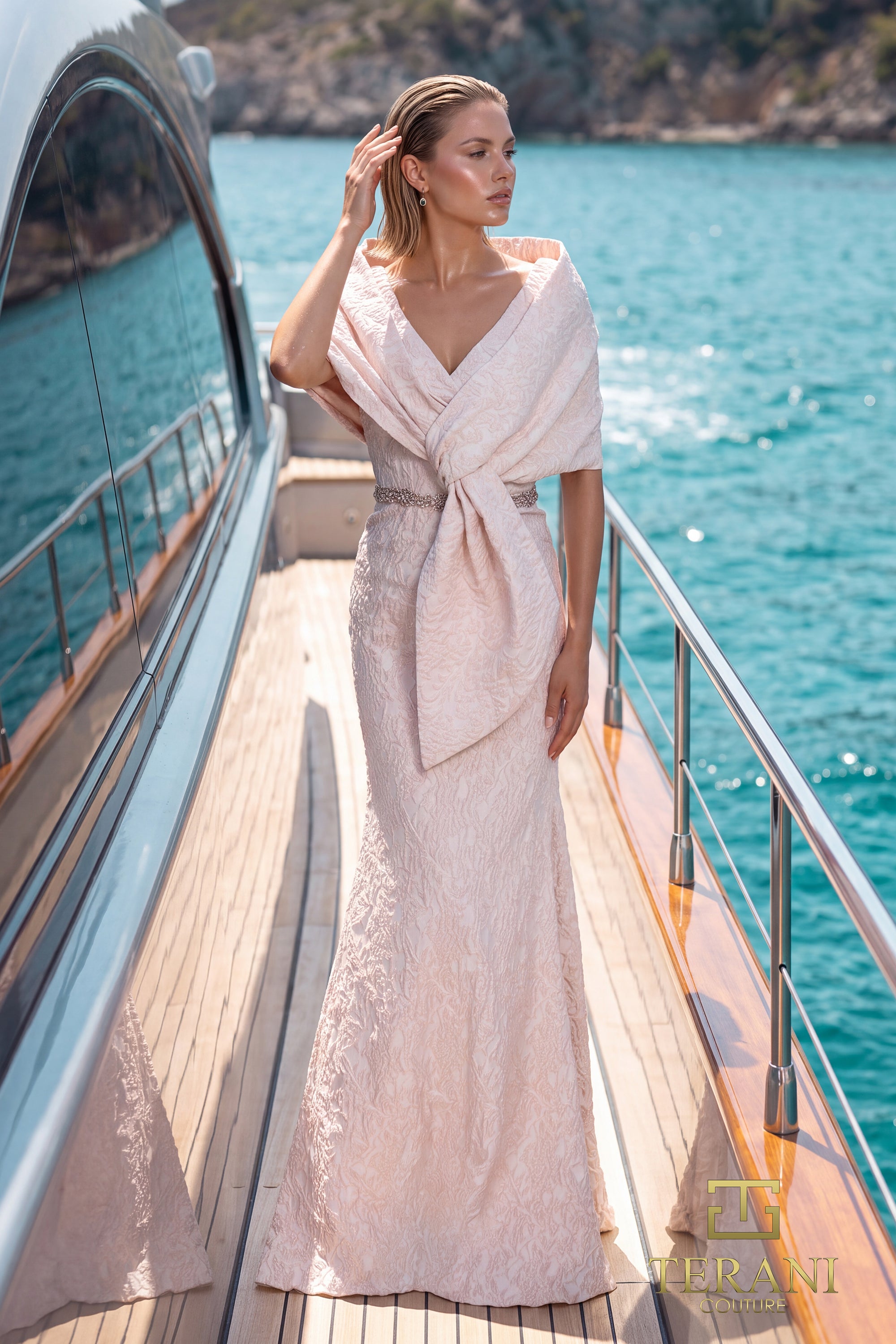
lets the woven pattern in the fabric do the detailing, pairing it with a draped off-shoulder stole over a corset bodice and a beaded waistband. It flows into a trumpet skirt with a sweep train, and the stretch built into the jacquard keeps the fit comfortable through a long event.
5. Organza
Organza is sheer like chiffon, but with a lot more structure and crispness. It holds volume in trains, veils, and ballgown skirts without adding weight.
- Best for: Ballgown skirts, trains, and veils; builds volume without bulk, good for petite or fuller frames that want fullness without weight
- Best season: Spring and summer, light enough for warm weather despite the structure
- Feel: Lightweight but crisp, can feel a little scratchy directly against skin
- Travel advisory: Wrinkles in sharp lines if compressed, so hang it right after unpacking instead of leaving it folded.
Terani's Pick:
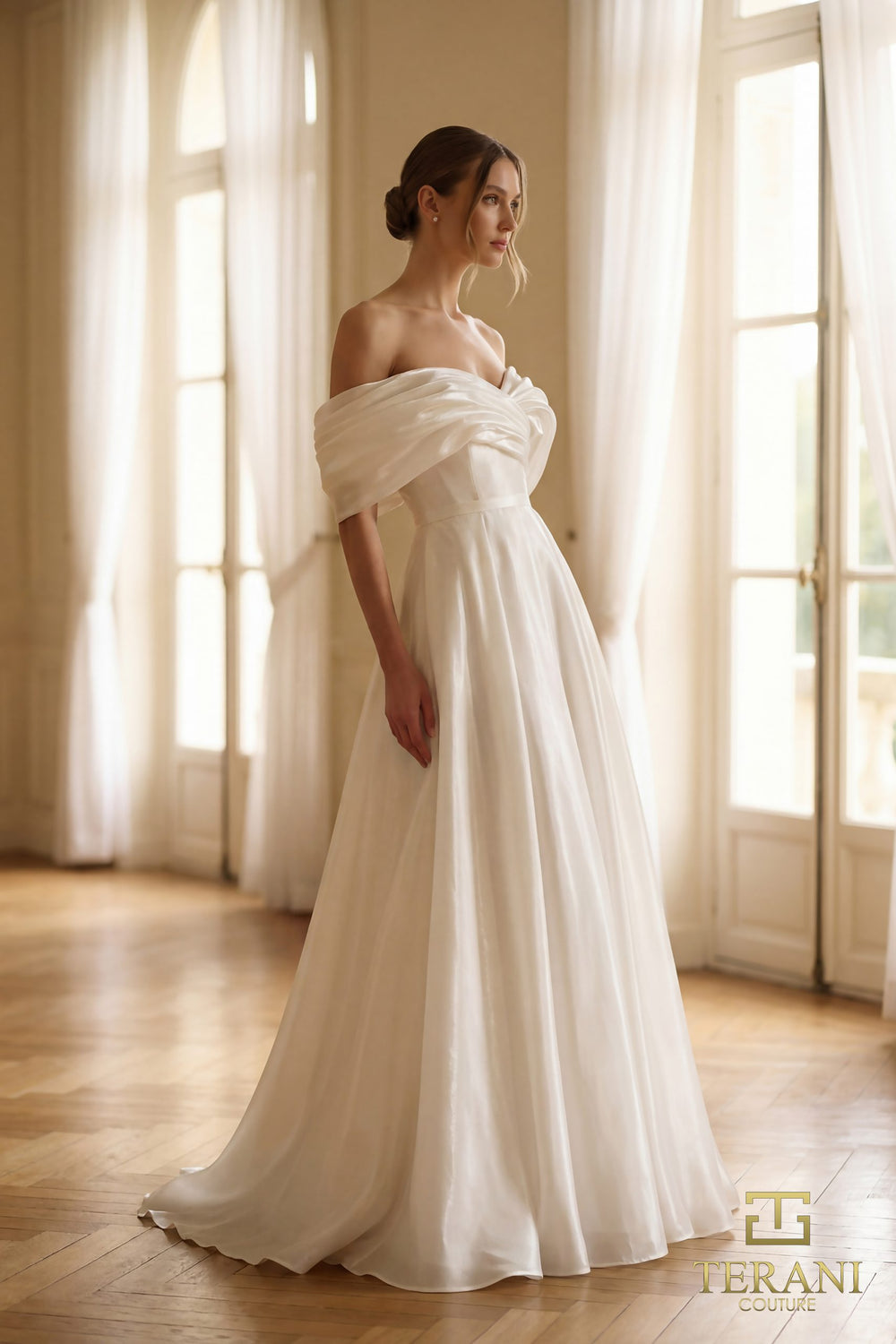
uses liquid organza to hold graceful movement in the skirt while keeping the structured off-the-shoulder neckline crisp. A thigh-high front slit adds drama without sacrificing the fabric's flowing quality, closing with a back zipper and hook.
6. Tulle
Tulle is a fine, netted fabric known for its airy, romantic look. It's the classic choice for full ballgown skirts and layered veils.
- Best for: Full ballgown skirts and layered veils; stays light no matter how many layers stack, flattering on petite frames and comfortable for taller brides too
- Best season: Year-round, especially popular for spring and summer
- Feel: Very light, breathable, can feel slightly scratchy without a lining underneath
- Travel advisory: Rarely wrinkles thanks to its open weave, but give the layers room to breathe inside a garment bag.
Terani's Pick:
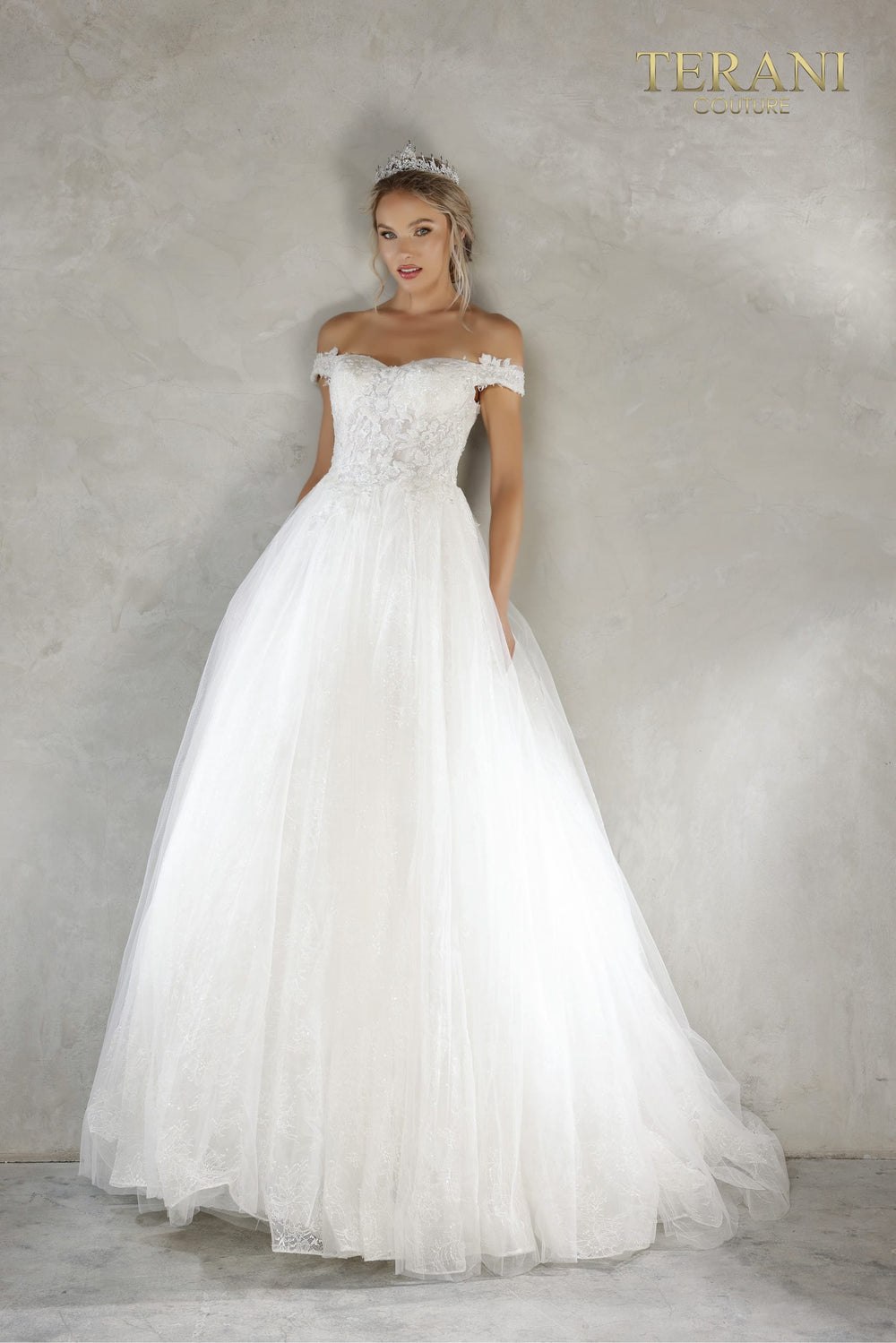
layers floaty tulle into an airy A-line skirt and train, paired with an off-the-shoulder neckline, lace flower appliques, and a corset-nipped back. The tulle keeps the skirt light even with the layered fullness and sweeping train.
7. Lace
Lace is the most versatile wedding dress fabric on this list. Grace Kelly's 1956 wedding gown paired antique Brussels lace with a silk faille skirt, and the dress still sits in the Philadelphia Museum of Art's permanent collection today.
- Best for: Nearly every silhouette; sheer lace suits fitted sheaths on slimmer frames, structured lace suits ballgowns for fuller figures
- Best season: Year-round, adapts depending on the weight of lace used
- Feel: Varies widely, can be soft and flexible or stiff and structured depending on the base
- Travel advisory: How it travels depends on the base fabric, so use tissue paper between layers to protect delicate lace while packing.
Terani's Pick:
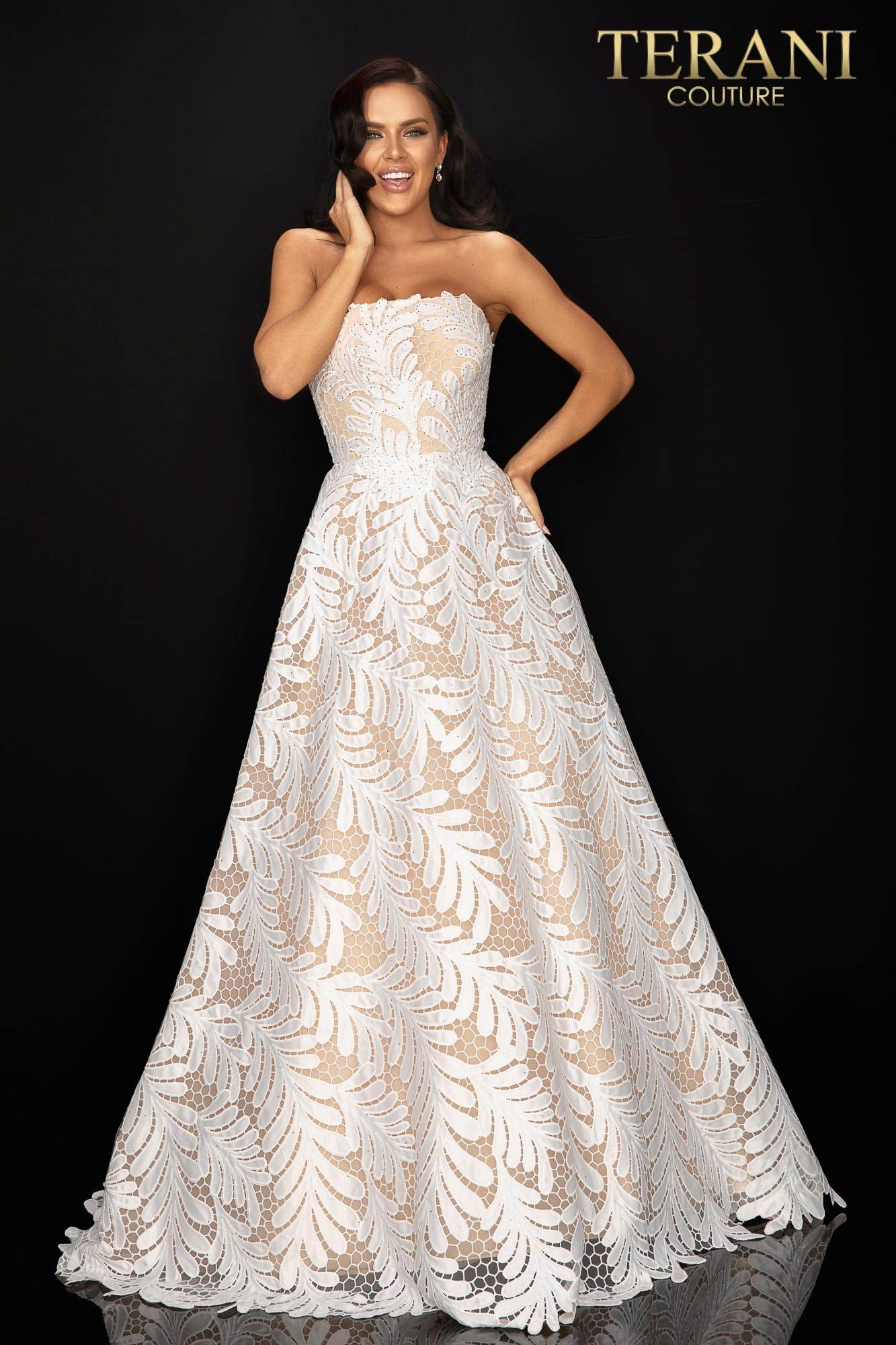
uses a leaf-motif embroidered net over the bodice, with a strapless straight-across neckline and an open V back. The skirt flares into a full ballgown silhouette with a sweep train, letting the embroidery sit forward while the fuller skirt underneath keeps the shape.
8. Crepe
Crepe is soft, matte, and has a light natural stretch built into the weave. It drapes close to the body, which suits minimalist, modern silhouettes.
- Best for: Column and sheath silhouettes; skims the body rather than clinging tightly, suits slimmer and athletic frames especially well
- Best season: Spring and summer, breathable enough for warm weather and long days
- Feel: Soft, matte finish, light natural stretch that moves with the body
- Travel advisory: Naturally wrinkle-resistant, making it one of the easier fabrics to pack for a destination wedding.
Terani's Pick:
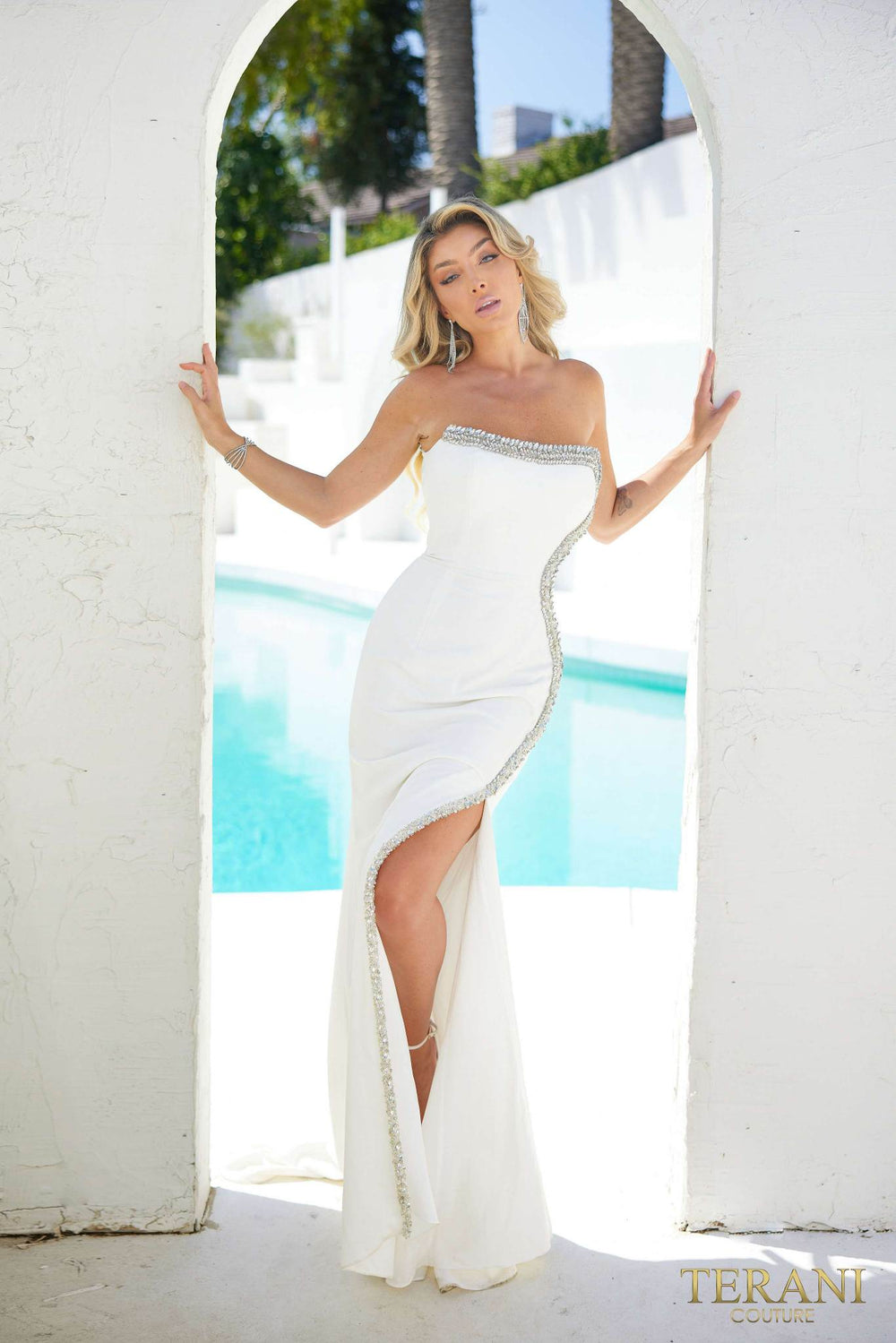
lets crepe's natural drape and light sparkle define the column silhouette, with beaded detailing along the bust line that extends down the dress to shape the waist.
9. Scuba
Scuba is a smooth, stretchy synthetic fabric that holds its shape on its own. It needs no boning or structure underneath.
- Best for: Sheath and bodycon cuts; the stretch moves with curvier figures and holds shape without any boning underneath
- Best season: Year-round, especially suited to warm-weather or destination weddings
- Feel: Smooth, stretchy, holds shape without feeling restrictive
- Travel advisory: Highly wrinkle-resistant and packs well, which is why it's a common choice for reception dresses that travel with the bride.
Terani's Pick:
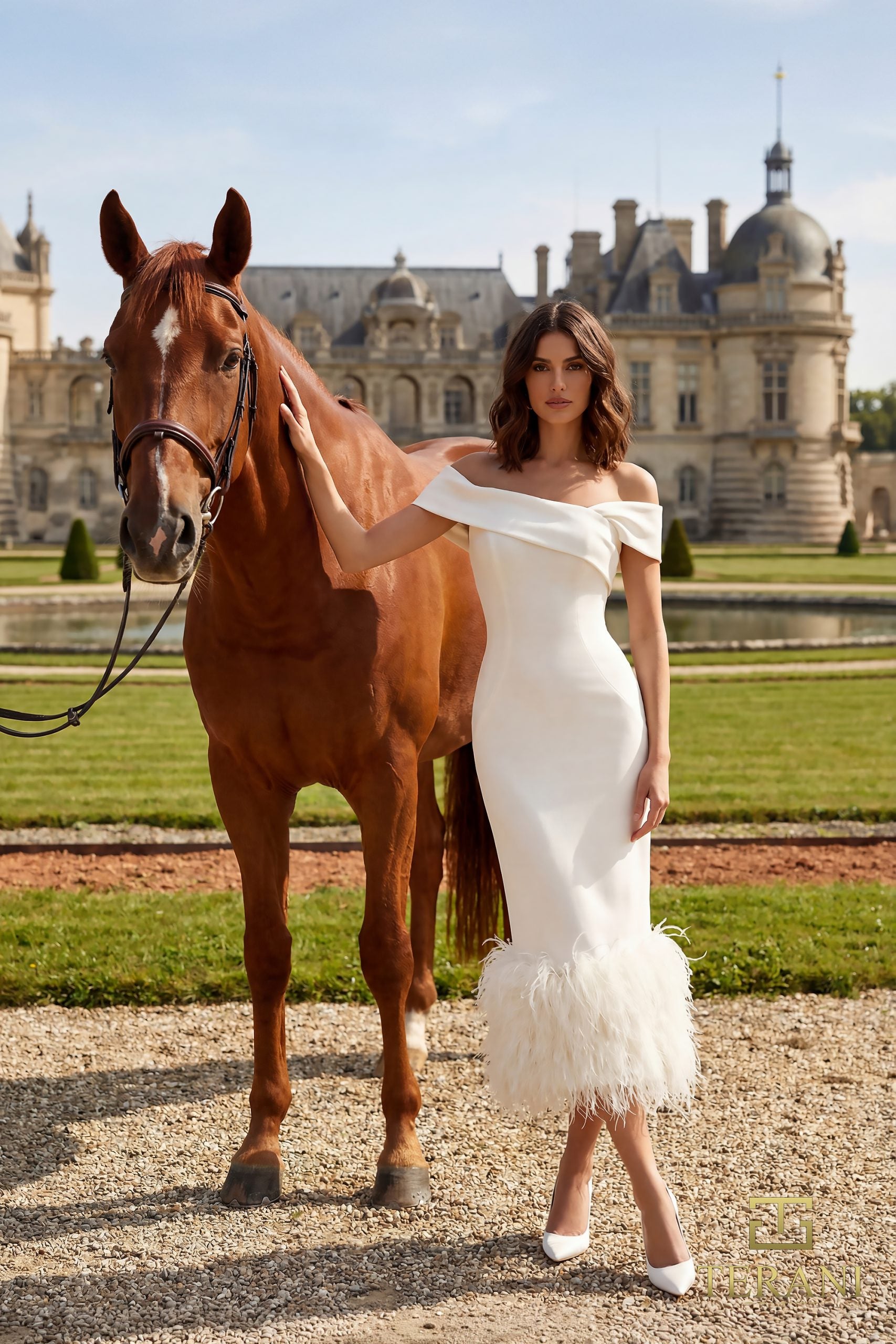
uses structured scuba to hold a fitted sheath shape on its own, with an off-the-shoulder neckline and feather detailing at the tea-length hem for movement. It closes with a center-back zipper and hook-and-eye.
10. Neoprene
Neoprene is thicker and firmer than scuba, with more built-in structure. It sculpts the body on its own, without any extra support underneath.
- Best for: Structured mini or cocktail silhouettes; sculpts the body on its own, works well for straighter frames wanting more definition
- Best season: Spring and summer, suited to shorter, warm-weather occasions like rehearsal dinners
- Feel: Firm and structured, minimal stretch, holds shape without needing support underneath
- Travel advisory: Holds its shape and resists creasing even when packed in a smaller bag.
Terani's Pick:
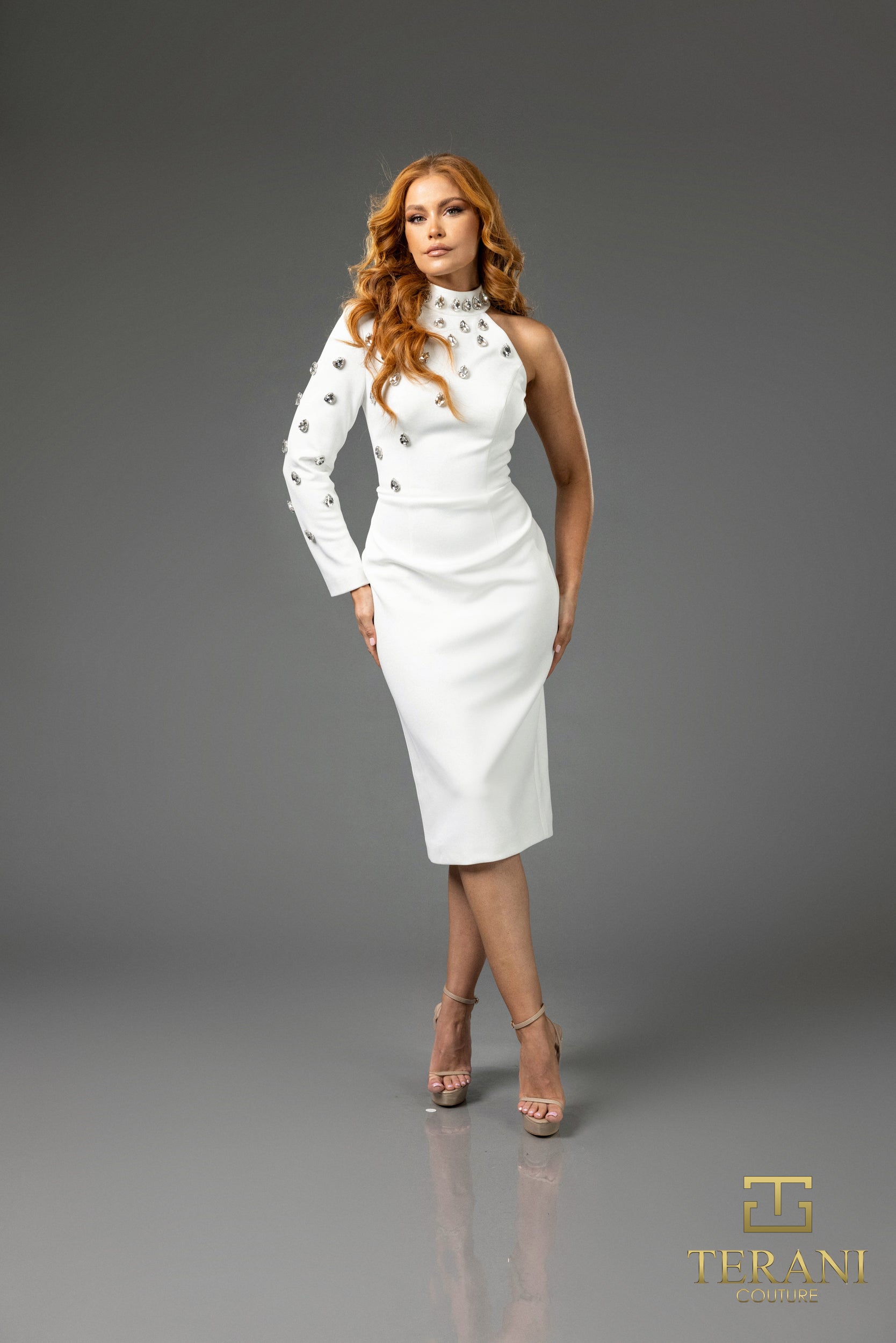
uses neoprene's built-in firmness to hold a fitted bodycon shape in a short silhouette, with a round neckline keeping the look clean and structured.
11. Scribble
Scribble fabric has a raised, textured surface that looks almost hand-drawn. It hugs the body while adding visual interest without any extra beading.
- Best for: Fitted or A-line silhouettes; the raised texture adds shape without volume, flattering on both petite and curvier frames
- Best season: Year-round, commonly used for spring and summer pre-wedding events
- Feel: Textured surface, slight stretch, hugs the body without feeling tight
- Travel advisory: The raised texture hides minor creases, though hanging it is still safer than folding for longer trips.
Terani's Pick:
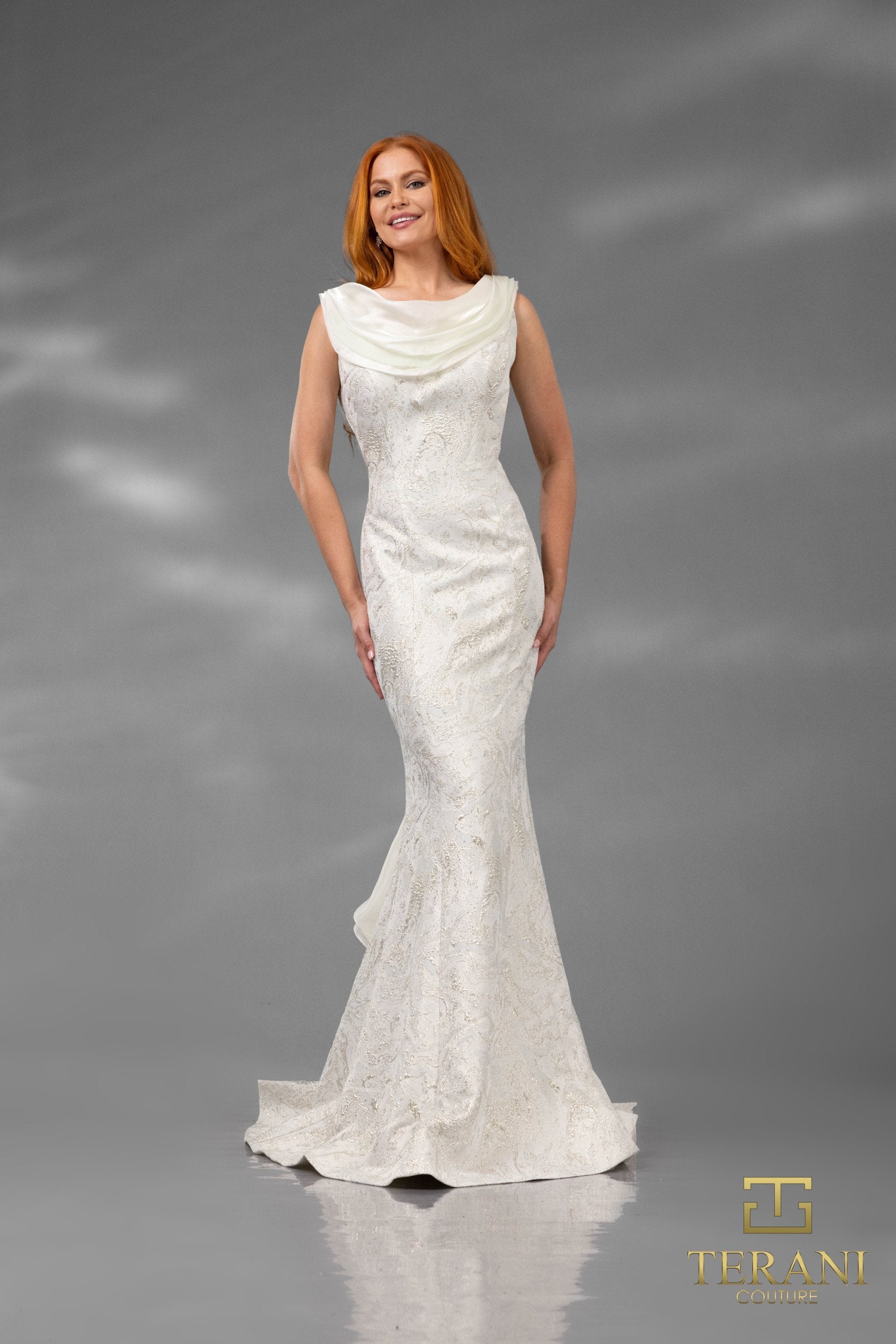
uses scribble's raised texture to hug the body through an A-line silhouette, with a cowl neckline adding a soft twist to the sleeveless design.
How Do You Choose a Wedding Dress Fabric Based on Your Venue?
Your wedding venue affects how your dress looks, feels, and performs throughout the day. For outdoor weddings, lightweight fabrics help you stay comfortable and move with ease. Indoor venues can support heavier, structured materials that create a more formal look.
|
Wedding Venue |
Best Fabrics |
Why They Work |
|
Beach |
Organza, Crepe |
Lightweight fabrics stay comfortable and move beautifully in the breeze. |
|
Garden |
Lace, Tulle |
Soft textures complement natural surroundings and romantic settings. |
|
Ballroom |
Satin, Mikado |
Structured fabrics create an elegant, polished look. |
|
Church |
Satin, Lace |
Classic materials suit traditional ceremonies. |
|
Courthouse |
Crepe, Scuba |
Clean lines create a chic, modern appearance. |
|
Estate or Castle |
Mikado, Jacquard |
Rich textures enhance luxurious venues. |
Quick Tip: Bring a fabric swatch to your venue walkthrough if you can. Seeing how it photographs in that exact lighting makes the decision much easier.
Which Wedding Dress Fabric Is Best For Each Wedding Season?
The weather can influence how comfortable your wedding dress feels just as much as its design. Choosing a season-appropriate fabric helps you stay comfortable while ensuring your gown looks its best throughout the celebration.
|
Season |
Recommended Fabrics |
Why They Work |
|
Spring |
Organza, Lace, Scribble |
Lightweight with soft texture and movement |
|
Summer |
Crepe, Organza, Tulle |
Breathable and airy for warm weather |
|
Fall |
Satin, Jacquard, Scuba |
Balanced structure and comfortable weight |
|
Winter |
Mikado, Taffeta, Neoprene |
Rich, structured fabrics that suit formal celebrations |
Quick Tip: If you're planning an outdoor wedding, always consider the local climate instead of the season alone. A fall wedding in California may require lighter fabrics than one in New York.
Conclusion
Your wedding dress fabric shapes how you look, move, and feel on your big day. Structured fabrics like mikado and taffeta build drama into a silhouette. Flowy fabrics like tulle and organza keep you cool and comfortable. Lace works almost anywhere, in any season. While choosing the fabric of your dreamy wedding dress, start with your venue and season, then let your silhouette guide the rest. Terani Couture carries all of these different types of wedding dress fabrics across our bridal and occasionwear collections, so you can find the one that feels like you.
Recently Viewed Articles
Frequently Asked Questions
Terani Couture Brings Spring ’27 To Paris Fashion Week 2026
Quick answer: Terani Couture is hosting premium fashion appointments at Hotel Le Meurice, 228 Rue de Rivoli, Paris, from October 2 to 5, 2026, during Paris Fashion Week 2026. New and existing...
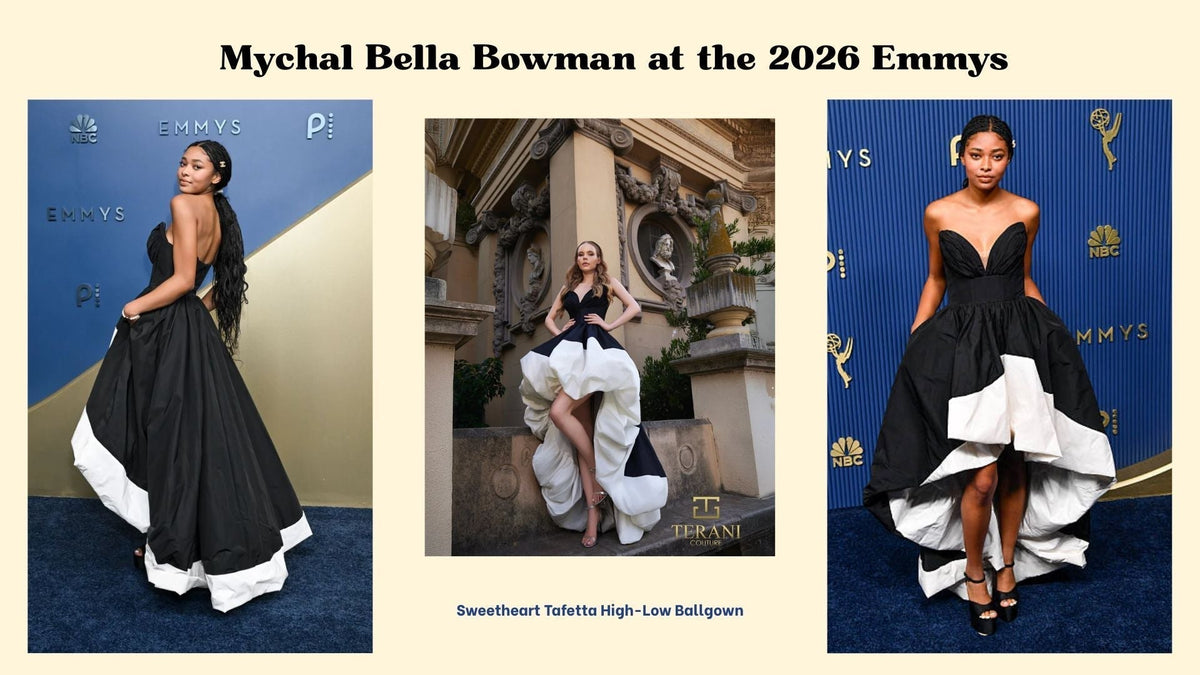
Mychal-Bella Bowman Wears Terani Couture at the 2026 Emmy Awards
On Monday, September 14, 2026, the 78th Emmys red carpet delivered plenty of iconic fashion moments, with one particular Terani Couture look becoming a memorable highlight of the evening. Actress, ...
Terani Couture Redefines Evening Wear: What Sets the Brand Apart?
We at Terani Couture continue to set a new standard in the world of fashion with our evening wear. Since 1990, we have evolved as a brand that has become a symbol of elegance, luxury, and sophisti...
Are You Looking For A Terani Gown?
At Terani, we believe every gown tells a story of elegance, confidence, and individuality. Whether you're preparing for a special occasion or redefining your style, our collection is designed to make you stand out effortlessly.
Let’s Talk